Coming from Runway, Pika, or another cloud tool? Stop paying per render.
Runs on your own GPU

Free local AI image-to-video,
woven from your own GPU.

Three tested WAN 2.2 workflows, a one-click local setup, and full control over every render — with no cloud subscription eating into your pocket every month.

FREE TO USE · NO CREDIT CARD · WINDOWS & LINUX
97%
GPU
94%
VRAM
68°
TEMP
1 0 1 0 0 1 0 1 1 1 0 0 0 0 1 1 1 0 0 1
Render engine connected
Before you start

Loomance animates an image — here's where that image comes from.

1. Get a starting image

💬 ChatGPT — free, our default pick

Want higher-end results? Midjourney or Ideogram are solid paid options. Or use your own artwork or photo. Loomance doesn't generate the source image — it brings one to life.

2. Animate it in Loomance

Import the image, pick a workflow (Stable Scene, First → Last Frame, or Wild Mode), and render.

3. Add sound & polish

🎬 VideoProc Vlogger — free, simple, does the job

Loomance handles the animation, not audio. Any video editor you're already comfortable with works too — this is just the one we use.

Prefer to watch it? See the full walkthrough on our YouTube channel.

See it running

Not a mockup — the actual desktop app.

A real screen recording: picking a workflow, extracting frames from a video to use as a source, watching a render weave, switching between Stable Scene and First → Last Frame.

Three workflows

Pick a mode, not a node graph.

Every workflow is pre-wired and tested — no ComfyUI graph-building required.

Stable Scene

Faithful to your source image, smooth and color-stable animation. The safe, reliable default.

First → Last Frame

Animate between a start and an end frame you choose — for precise, directed motion.

Wild Mode

Unpredictable — camera, environment and subject can all shift. For when you want surprises.

Real output

Not a mockup. Actual renders.

Every clip below was generated locally, on a single consumer GPU, with Loomance.

These clips run at max resolution and frame rate on a 12GB GPU — that's why they're a few seconds each. Lower the resolution or FPS in-app for longer renders per pass, or stitch multiple renders together to build a longer sequence.

Stitched sequence

Same axolotl, several renders, one continuous scene.

This 28-second clip is multiple separate Loomance renders stitched together in a video editor, then run through the free Animation Upscaler to 1080p. No single render is this long — this is what stitching (mentioned above) looks like in practice.

One drawing, two directions

Faithful, or wild — you choose.

Same source image, same app, two completely different outcomes. Stable Scene keeps every crayon stroke exactly as drawn. Wild Mode reimagines the whole scene.
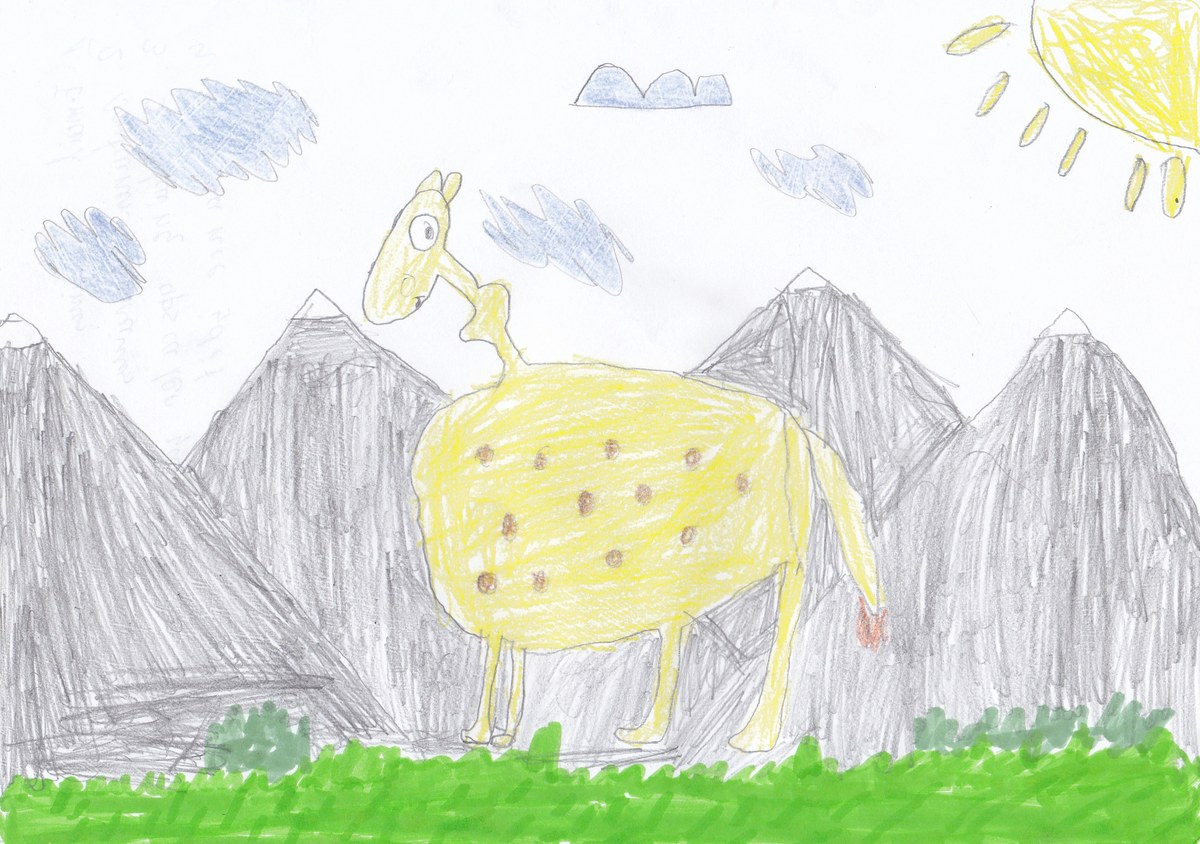
The source
Original hand-drawn crayon sketch of a spotted animal

A rough, hand-drawn crayon sketch — exactly the kind of imperfect source image most AI video tools try to "clean up."

Stable Scene

Environment stays put. Character stays put. Just breathing.

Most tools "improve" a rough sketch into something smoother and lose its character in the process. Stable Scene doesn't — the drawing gets subtle motion while everything about it, and the world around it, stays exactly as drawn.

  • ✓ Environment — unchanged
  • ✓ Character design — unchanged
  • ✓ Art style — unchanged
  • ✓ Only motion is added
Wild Mode

Same sketch. Everything is up for grabs.

Want to be surprised instead? Wild Mode takes the same starting sketch as inspiration, not a fixed template — the environment, the character's look, even the art style can all shift into something new.

  • ⚡ Environment — can change
  • ⚡ Character design — can change
  • ⚡ Art style — can change
  • ⚡ Every render is different

Two separate Wild Mode renders from the exact same source sketch — no two runs look alike.
First → Last Frame

You set the start. You set the end. Loomance fills in the motion.

Give it a starting image and an ending image — Loomance renders everything that happens in between, with a camera move and pacing that connects them naturally.

First frame
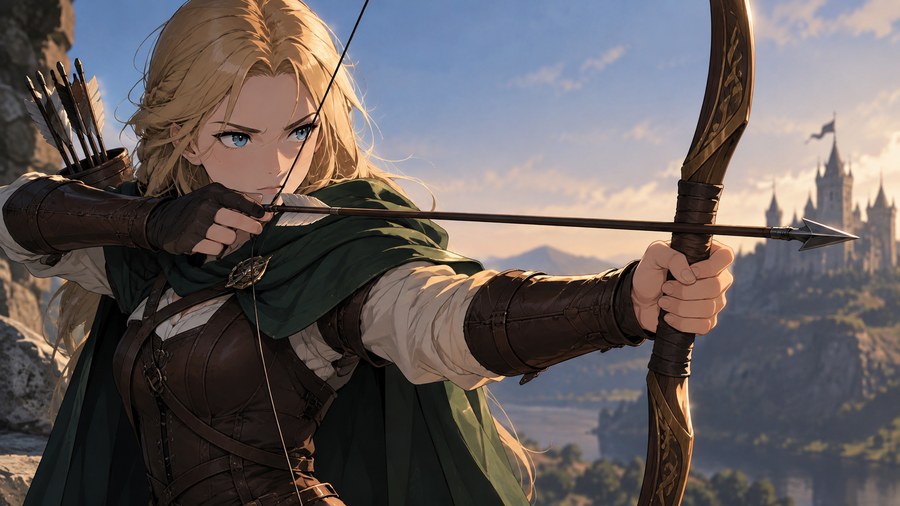
Archer drawing her bow, aiming
Last frame
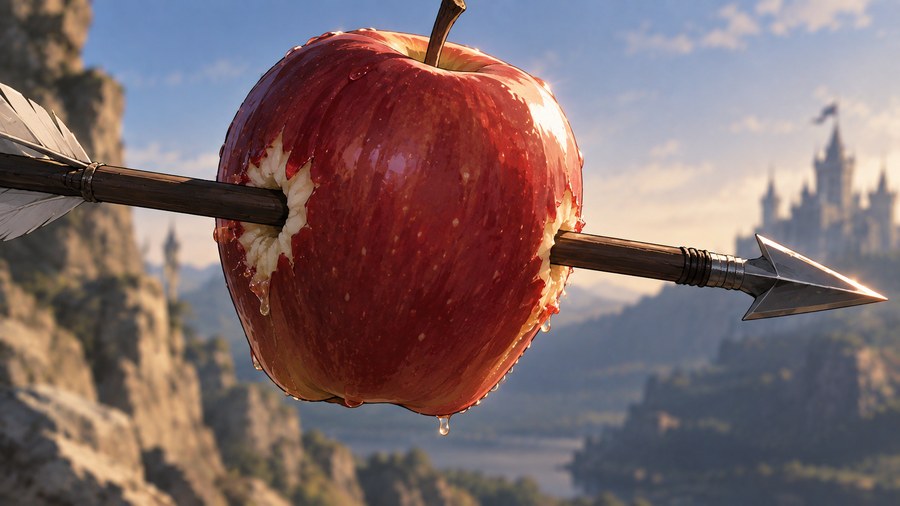
Apple pierced by an arrow
The result

One prompt describing the shot, two anchor images — Loomance renders the arrow's flight in between, camera and pacing included.

Free companion tool

Animation Upscaler.

A free, standalone app that sharpens and upscales any animation — Loomance renders or not. Runs on your own GPU (or CPU, no NVIDIA card required). No account, no watermark, no catch.

Noise reduction & detail preservation

Two independent sliders, not one blunt "enhance" toggle. Push detail preservation high for hand-drawn linework and painterly textures; lean on noise reduction for grainy or compressed source footage. The right balance depends on your source's style — dial it in per clip instead of accepting one fixed look.

Upscale factor

2× or 4× your source resolution. 2× is faster and enough for most web/social use; 4× is for when the output needs to hold up at full screen or on a larger display.

Choice of AI model

Aion-CG and Artemis HQ are tuned for 2D/anime-style animation; Proteus v4 suits more painterly or semi-realistic renders. A Classic (Lanczos, no AI) mode is also available when you want a pure resize with zero neural-net reinterpretation.

Original, before upscaling After Animation Upscaler
BEFORE
AFTER
↔
⤢ click to enlarge

Drag left/right to compare

Download free — Windows / Linux / Mac
× Fullscreen view
Why local

Free. Not a monthly meter.

Cloud AI video tools bill per render, forever. Loomance runs on hardware you already own — at no cost.

 LoomanceCloud subscription
Pricing modelFree to useRecurring, every month
Where it runsYour own GPUSomeone else's server
Render limitsNo render caps — your hardware, your paceTiered, often capped
Your prompts and imagesNever leave your machineUploaded to a third party
Internet connectionOnly to launch the app — nothing is uploadedRequired for every render
What you'll need

Honest requirements, not marketing numbers.

These are based on real testing, not spec-sheet theory.

GPU

NVIDIA graphics card

You don't need top-of-the-line hardware to start creating — a mid-range gaming GPU is enough to get going. Tested and tuned on an RTX 5070 (12GB). 8GB can work too if you scale down resolution and clip length. A stronger card just opens up more: higher resolution, longer clips, higher FPS. There's real headroom to grow into, not a hard ceiling.

RAM

32GB system RAM

Recommended minimum. The one-click installer and model loading are noticeably smoother above this.

DISK

~40GB free space

For the automatic ComfyUI + model install. Renders and outputs use additional space as you go.

Pricing

Free to use. Ad-free if you support it.

No usage tiers, no seat limits, no per-render billing — just a short video ad now and then when you start a render, or become a Founding Supporter for one flat monthly price.

Loomance
Free
Everything unlocked — no render caps, no credit card, no time limit. A short video ad plays now and then when you start a render.
  • All three workflows
  • Full resolution options
  • Unlimited renders
  • Free updates
Download free
Founding Supporter
€14.99 / month
Same app, same workflows — no ads, ever. Cancel anytime.
  • Everything in Free
  • No ads, no interruptions
  • No watermark on Linux
  • Unlimited overnight queues
  • Cancel anytime
  • Supports future development

Free users can queue up to 3 renders at a time. Ads are provided by Liftoff — see our privacy policy.

Why not a generalist tool?

Loomance does one thing — animation — and tunes everything around it.

Broad "everything AI" apps spread their attention across images, video, 3D, and audio, and often gate their best models behind ongoing credits even after a one-time payment. Loomance stays narrow on purpose: three workflows (Stable Scene, First → Last Frame, Wild Mode), each built and tested specifically for image-to-video animation on consumer GPUs — not a generic pipeline repurposed for animation as an afterthought.

Loomance has no credit system and no usage meter — every workflow, every resolution option, and every render is included in the free tier, ads and all. Prefer no interruptions? One flat monthly price removes them, with no per-render billing hiding behind it.

Who makes Loomance

Built by one developer, not a cloud company.

Hi, I'm Vismantas, a solo developer from Lithuania, working as HumansAI Studio. I built Loomance because cloud AI video tools charge for every experiment, while many people already have a capable GPU sitting at home.

Loomance is my attempt to make AI animation affordable: it runs entirely on your own computer, your images never leave it, and the app is free to use. Ads and an optional Founding Supporter plan keep it sustainable.

Questions, bugs or ideas? Write to me directly at info@loomance.app. I read every message.

FAQ

Good to know before you install.

Do I need a specific tool to make the starting image?
No — any starting image works. We use ChatGPT (free) to generate ours; Midjourney or Ideogram are good paid alternatives if you want higher-end results, or use your own artwork and photos. For sound and final editing, we use VideoProc Vlogger (free, simple, does the job) — but any video editor you're already comfortable with works too. Loomance handles the animation itself, not audio or export polish.
Do I need my own ComfyUI setup?
No — Loomance installs and configures ComfyUI, the required custom nodes, and all models automatically on first launch.
Does my data ever leave my computer?
No. Every render runs entirely on your own GPU, and your images and prompts are never uploaded.
Does Loomance need the internet?
Yes, to start the app and to show ads. All rendering happens on your own GPU, and your images and prompts are never uploaded.
Is Loomance really free — what's the catch?
Loomance is free, with no render caps and no credits. Free users see a short video ad now and then when they start a render (on Linux, renders get a small watermark instead). Founding Supporters get no ads, no watermark and unlimited overnight queues.
What if my GPU has less than 12GB VRAM?
8GB can work — scale down resolution and clip length in-app to fit your VRAM. It won't match a 12GB+ card's speed or headroom, but it's a real starting point, not a hard cutoff.
Can I join multiple renders into one longer scene?
Yes — each render is a short clip (length depends on your resolution/FPS settings), and you can stitch several together in any video editor to build a longer, continuous sequence.
Windows says "Windows protected your PC" — is the installer safe?
Yes. This SmartScreen warning appears for any new app from an independent developer that hasn't yet paid for an expensive code-signing certificate — it's not a virus flag, just Windows being cautious about unfamiliar publishers. Click "More info," then "Run anyway." The same applies to some Linux distributions flagging the AppImage/.deb as from an "unknown source" — mark it executable / allow it and proceed as normal.

Ready to weave your first scene?

Completely free, no credit card required.

Tip: the Microsoft Store version installs without any security prompt and updates automatically. The .exe installer may show a "Windows protected your PC" notice on first run — this is normal and safe. Why? →